Multiplying Negatives
When We Multiply:
| Example | |||
 × × | two positives make a positive: | | 3 × 2 = 6 |
 × × | two negatives make a positive: | | (−3) × (−2) = 6 |
| × | a negative and a positive make a negative: | | (−3) × 2 = −6 |
| × | a positive and a negative make a negative: | | 3 × (−2) = −6 |
Yes indeed, two negatives make a positive, and we will explain why, with examples!
Signs
Let's talk about signs.
"+" is the positive sign, "−" is the negative sign.
When a number has no sign it usually means that it is positive.
And we can put () around the numbers to avoid confusion.
Two Signs: The Rules
| "Two like signs make a positive sign, two unlike signs make a negative sign" | 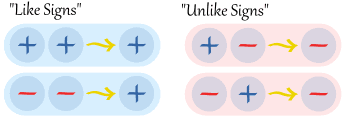 |
Why does multiplying two negative numbers make a positive?
Well, first there is the "common sense" explanation:

When I say "Eat!" I am encouraging you to eat (positive)
But when I say "Do not eat!" I am saying the opposite (negative).
Now if I say "Do NOT not eat!", I am saying I don't want you to starve, so I am back to saying "Eat!" (positive).
So, two negatives make a positive, and if that satisfies you, then you don't need to read any more.
Direction
It is all about direction. Remember the Number Line?

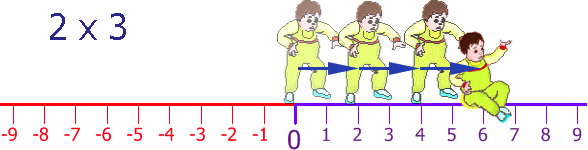
Well here we have Baby Steven taking his first steps. He takes 2 paces at a time, and does this three times, so he moves 2 steps x 3 = 6 steps forward:
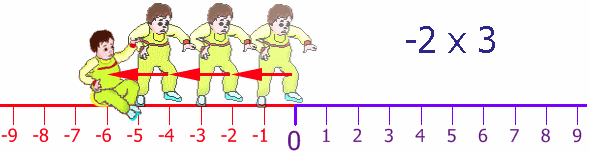
Now, Baby Steven can also step backwards (he is a clever little guy). His Dad puts him back at the start and then Steven steps backwards 2 steps, and does this three times:
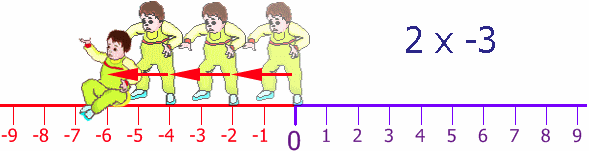
Once again Steven's Dad puts him back at the start, but facing the other way. Steven takes 2 steps forward (for him!) but he is heading in the negative direction. He does this 3 times:
Back at the start again (thanks Dad!), still facing in the negative direction, he tries his backwards walking, once again taking two steps at a time, and he does this three times:
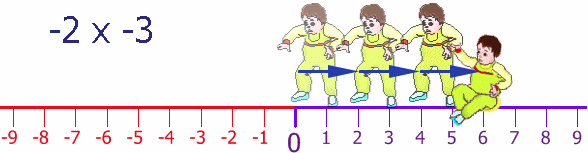
So, by walking backwards, while facing in the negative direction, he moves in the positive direction.
Try it yourself! Try walking forwards and backwards, then again but facing the other direction.
More Examples
Multiplication Table
Here is another way of looking at it.
Start with the multiplication table (just up to 4×4 will do):
| × | 1 | 2 | 3 | 4 |
|---|---|---|---|---|
| 1 | 1 | 2 | 3 | 4 |
| 2 | 2 | 4 | 6 | 8 |
| 3 | 3 | 6 | 9 | 12 |
| 4 | 4 | 8 | 12 | 16 |
Now see what happens when we head into negatives!
Let's go backwards through zero:
| × | 1 | 2 | 3 | 4 |
|---|---|---|---|---|
| -4 | -4 | -8 | -12 | -16 |
| -3 | -3 | -6 | -9 | -12 |
| -2 | -2 | -4 | -6 | -8 |
| -1 | -1 | -2 | -3 | -4 |
| 0 | 0 | 0 | 0 | 0 |
| 1 | 1 | 2 | 3 | 4 |
| 2 | 2 | 4 | 6 | 8 |
| 3 | 3 | 6 | 9 | 12 |
| 4 | 4 | 8 | 12 | 16 |
Look at the "4" column: it goes -16, -12, -8, -4, 0, 4, 8, 12, 16. Getting 4 larger each time.
Look over that table again, make sure you are comfortable with how it works, because ...
... now we go further to the left, through zero:
| × | -4 | -3 | -2 | -1 | 0 | 1 | 2 | 3 | 4 |
|---|---|---|---|---|---|---|---|---|---|
| -4 | 16 | 12 | 8 | 4 | 0 | -4 | -8 | -12 | -16 |
| -3 | 12 | 9 | 6 | 3 | 0 | -3 | -6 | -9 | -12 |
| -2 | 8 | 6 | 4 | 2 | 0 | -2 | -4 | -6 | -8 |
| -1 | 4 | 3 | 2 | 1 | 0 | -1 | -2 | -3 | -4 |
| 0 | 0 | 0 | 0 | 0 | 0 | 0 | 0 | 0 | 0 |
| 1 | -4 | -3 | -2 | -1 | 0 | 1 | 2 | 3 | 4 |
| 2 | -8 | -6 | -4 | -2 | 0 | 2 | 4 | 6 | 8 |
| 3 | -12 | -9 | -6 | -3 | 0 | 3 | 6 | 9 | 12 |
| 4 | -16 | -12 | -8 | -4 | 0 | 4 | 8 | 12 | 16 |
Same pattern: we can follow along a row (or column) and the values change consistently:
- Follow the "4" row along: it goes -16, -12, -8, -4, 0, 4, 8, 12, 16. Getting 4 larger each time.
- Follow the "-4" row along: it goes 16, 12, 8, 4, 0, -4, -8, -12, -16. Getting 4 smaller each time.
- etc...
So it all follows a neat pattern!
What About Multiplying 3 or More Numbers Together?
Multiply two at a time and follow the rules.


0 comments:
Post a Comment